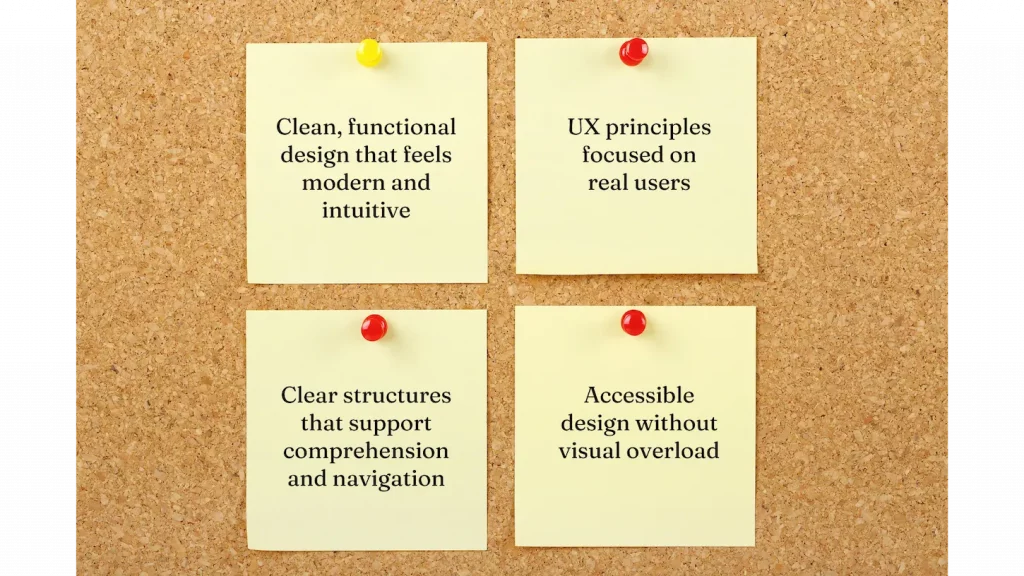
How I Think About Learning Designing effective learning isn’t about adding more content.It’s about designing for real behaviour change.Every structure, interaction, and visual decision supports how people actually learn and apply knowledge at work.See the process. How Strategy Becomes Design These are the design principles that guide every decision I make Realistic scenarios where learners make decisionsStories that connect ideas to real-world situationsInteractive activities that invite reflection, not just clickingShort video lessons built in Articulate RiseDownloadable PDF guides for those who want to explore furtherClear, human language for non-technical teams How Learning Is Structured Deep learner and context analysis before any design begins Clear definition of where learners are — and where they need to be Precise learning objectives aligned with real performance outcomes Structured narrative flow: scenarios, reflection, and assessment working together Every activity designed with purpose — no filler content From Insight to Course A structured process grounded in psychology, context, and real behaviour change. Learner & Context AnalysisUnderstanding who the learner really is — their role, constraints, environment, and daily reality. Performance & Behaviour DiagnosisClarifying where learners are now, and whether the gap is conceptual or behavioural. Evidence-Based Design FrameworkSelecting the learning theories, cognitive principles, and design models that best support the learning goal. Structured Learning ArchitectureDesigning the narrative flow, content structure, and learning progression — grounded in instructional psychology. Purposeful Learning ElementsScenarios, interactions, reflection, storytelling, and assessment — each included with intention, never as filler. Production Aligned With StrategyDeveloping the final course only after the design decisions have been fully validated.